
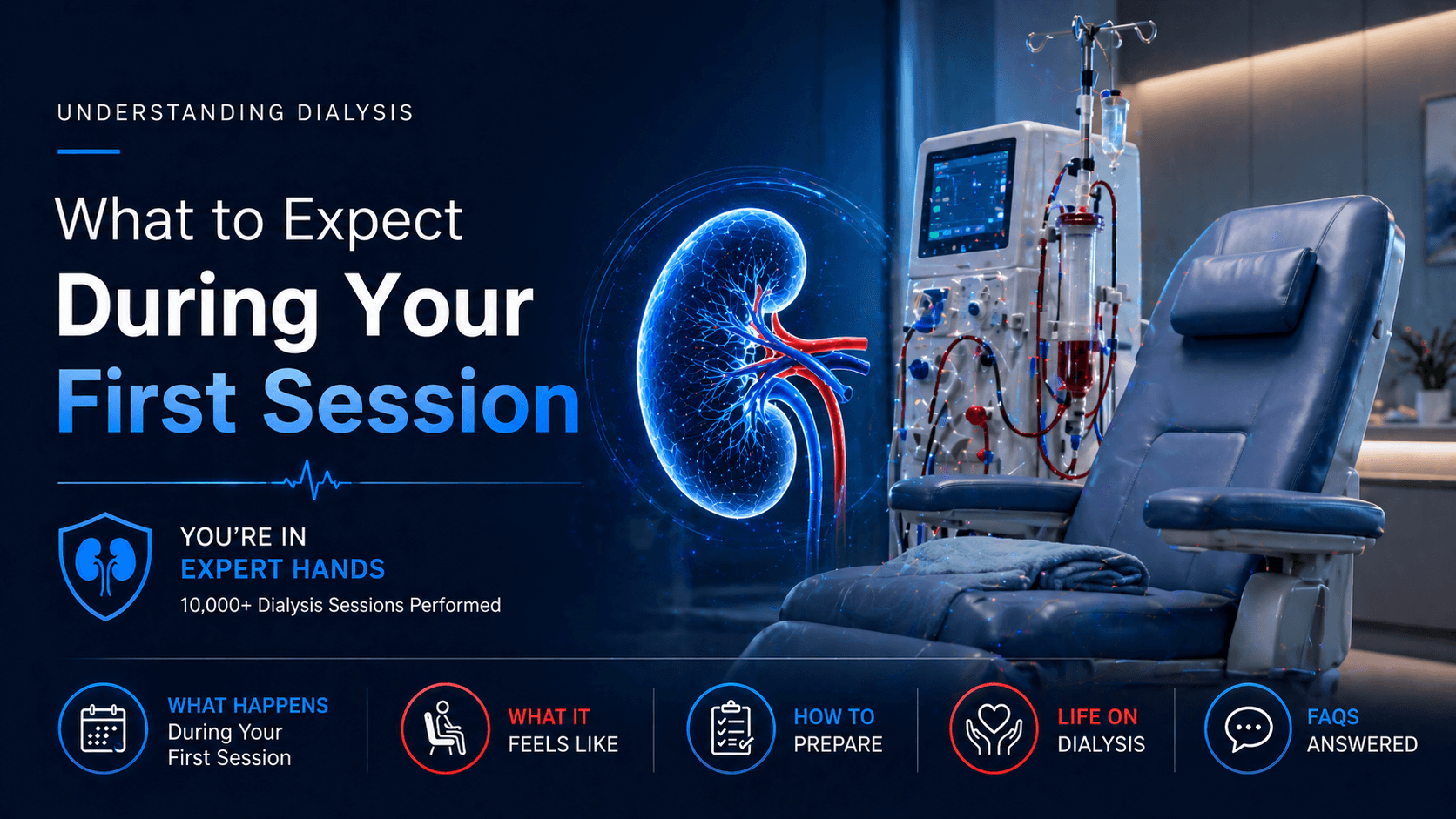
Understanding dialysis: what to expect during your first session
Introduction
If your doctor has told you that you need dialysis, you probably have questions. Most people do. The word itself sounds clinical and intimidating, and the internet is full of worst case scenarios that may not apply to you.
Dialysis is not a cure. It is a treatment that does part of the work your kidneys can no longer do. People live on dialysis for years. Some eventually get a transplant. Others continue with dialysis long-term and manage well.
This post is for anyone about to start dialysis, or anyone whose doctor has mentioned it as a possibility. Here is what actually happens, what it feels like, and how to prepare.
What dialysis does
Healthy kidneys filter waste, excess water, and minerals from your blood. When your kidneys are functioning at less than 10-15% of normal capacity, they cannot do this well enough to keep you alive. That is when dialysis steps in.
A dialysis machine acts as an external kidney. It pulls your blood out, runs it through a filter that removes waste and extra fluid, and puts the cleaned blood back. The process takes a few hours, and you need it regularly.
Types of dialysis
Hemodialysis
This is the most common type. Your blood flows through tubes to a dialysis machine, gets filtered, and returns to your body. It is done at a hospital or dialysis centre, usually three times a week, with each session lasting about 3 to 4 hours.
You need a vascular access point, usually an arteriovenous (AV) fistula in your arm. This is created surgically a few months before dialysis starts, so it has time to mature. The fistula connects an artery to a vein, making the vein large enough for the dialysis needles.
Peritoneal dialysis
This type uses the lining of your abdomen (the peritoneum) as the filter instead of a machine. A catheter is placed in your belly, and a special fluid is pumped in. The fluid absorbs waste from blood vessels in the peritoneum, then gets drained out.
Peritoneal dialysis can be done at home, which gives some people more flexibility. But it requires strict hygiene and daily treatments. Not everyone is a candidate for it.
What your first session looks like
Your first hemodialysis session is usually a bit longer than the regular ones. Here is the general flow:
- You arrive at the dialysis centre and sit in a reclining chair.
- A nurse checks your weight and blood pressure. Your weight tells them how much fluid needs to be removed.
- Two needles are inserted into your AV fistula or catheter. One draws blood out, the other returns it.
- The machine starts. You can read, watch something on your phone, sleep, or talk.
- During the session, staff monitor your blood pressure regularly.
- After 3-4 hours, the machine stops. Needles are removed. Your weight and blood pressure are checked again.
Some people feel completely fine during and after. Others feel lightheaded, tired, or get muscle cramps. This usually improves as your body adjusts over the first few sessions.
What dialysis feels like
The needle insertion is uncomfortable but quick. Most patients say the AV fistula needles feel like a bee sting. After a few sessions, you stop thinking about it.
During the session, some people feel cold. Some get leg cramps. Some feel a drop in blood pressure toward the end, which causes lightheadedness. These things are manageable. The staff adjust your treatment settings over time to minimize discomfort.
After the session, fatigue is common. Some patients feel washed out for a few hours. Others bounce back quickly. It varies person to person, and it often improves as you get used to the schedule.
How to prepare for your first session
- Wear comfortable, loose-fitting clothes. Your arm with the fistula needs to be accessible.
- Eat a light meal before the session. Do not skip eating, but do not eat heavily either.
- Bring something to pass the time: a book, headphones, your phone charger.
- Follow your doctor’s fluid intake instructions. Coming in with too much fluid makes the session harder.
- Ask questions. The dialysis staff do this every day. Nothing you ask will surprise them.
Life on dialysis
Dialysis is time consuming. Three sessions a week, each 3-4 hours, plus travel time. It restructures your week. There is no way around that.
But people work, travel, and live full lives on dialysis. Diet restrictions exist: you will need to limit salt, potassium, phosphorus, and fluid intake. Your dietician will give you a plan. It takes getting used to, but it becomes routine.
At Trinity Hospital Bhopal, our dialysis centre has handled over 10,000 dialysis sessions. The nephrology team knows what to expect and how to make the process as comfortable as possible.
Frequently asked questions
Does dialysis hurt?
The needle insertion causes brief discomfort. The process itself is not painful. Cramps and lightheadedness can happen but are manageable with adjustments to your treatment plan.
Can I travel while on dialysis?
Yes. You will need to arrange dialysis sessions at a centre near your destination in advance. Many centres accept visiting patients. Your current centre can help coordinate.
How long do people stay on dialysis?
Some people are on dialysis for months while waiting for a transplant. Others are on it for years, sometimes decades. It depends on your kidney condition, overall health, and whether transplant is an option.
Is dialysis covered by insurance?
Most health insurance plans in India cover dialysis. At Trinity Hospital, we are empanelled with multiple insurance companies for cashless treatment. Check with our empanelment desk for your specific plan.
Conclusion
Starting dialysis is a significant change, and it is normal to feel anxious about it. But the process itself is routine, the staff handle it daily, and most patients settle into a rhythm within a few weeks.
If your doctor has recommended dialysis or you want to understand your options, call Trinity Hospital Bhopal at +91-9109182424. Our nephrology team can walk you through the process, show you the dialysis centre, and answer your specific questions before anything starts. You can also book an appointment online.